The twelve vows of the Medicine Buddha, one by one
Twelve promises made before Awakening: light, wisdom, justice, food, clothing… The vows as presented in Xuanzang’s translation.
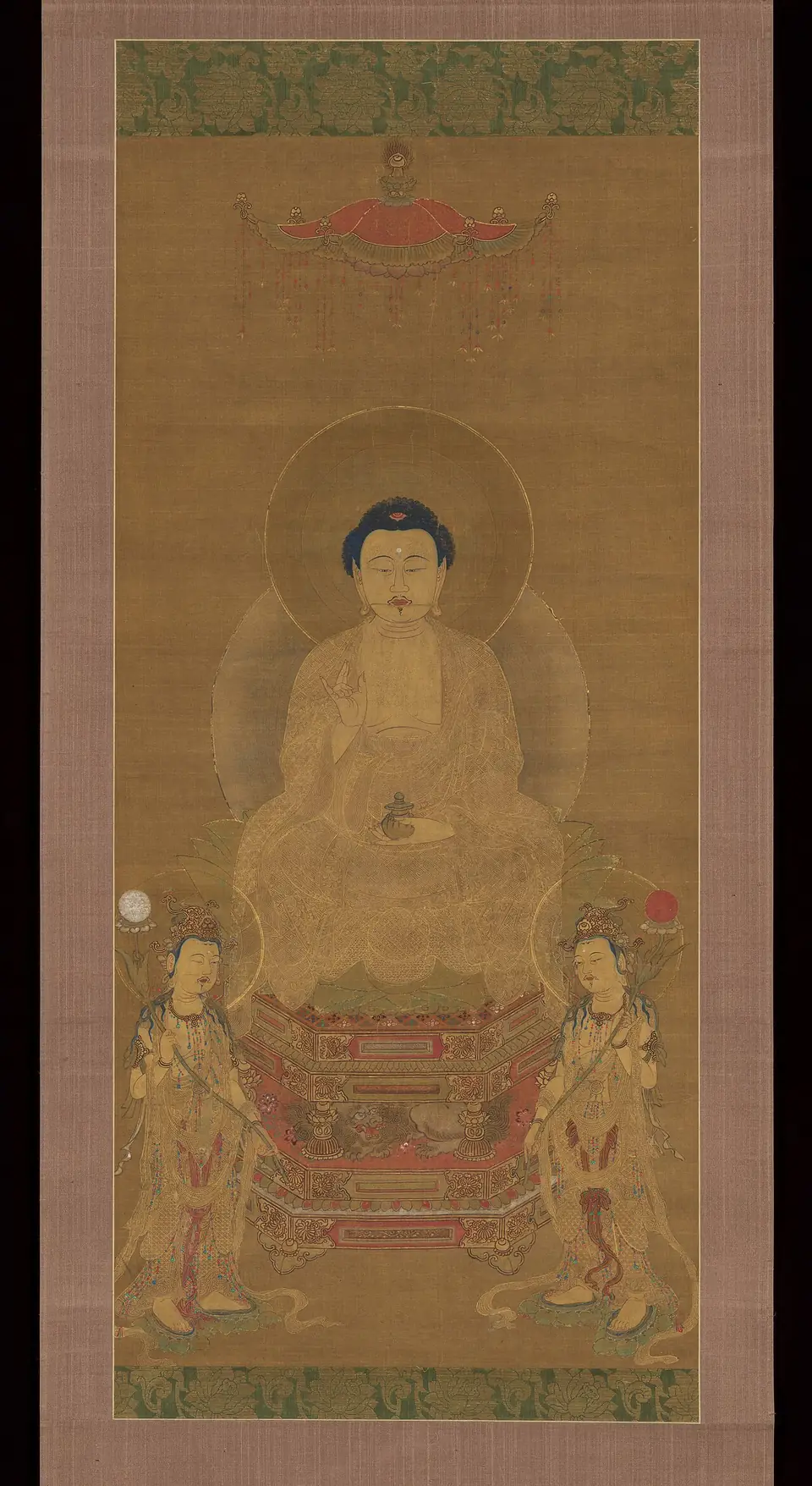
The vows are the heart of the sūtra. Before becoming a Buddha, Bhaiṣajyaguru was a bodhisattva who made twelve promises before an ancient Buddha. Each vow begins “When I attain Awakening…” and describes a world in which a particular suffering would have disappeared. Here is each of them, in a faithful paraphrase of Xuanzang’s translation (650). A reminder: these are religious aspirations, written in India more than fifteen centuries ago.
1. A light that illuminates everything
May my body shine and light up countless worlds, and may all beings be adorned with the marks of a Buddha. This is the vow of light.
2. A transparent body
May my body be pure as lapis lazuli, transparent within and without, and may this light dispel the darkness of beings. This is the blue colour, explained.
3. That nothing be lacking
May I, through wisdom and infinite means, fulfil the needs of all beings, so that none lacks what is necessary.
4. Towards the right path
May those who follow mistaken paths find the way to Awakening, and may those who travel in the vehicles of listeners or solitary buddhas be established in the Great Vehicle.
5. Pure conduct
May those who have received precepts and broken them be able to regain purity and not fall into bad destinies when they hear my name.
6. A whole body
May those whose bodies are marked by ugliness, blindness, deafness, infirmity or incurable illness be endowed with complete faculties on hearing my name. The text here states a spiritual wish for wholeness, in a time when disability meant social exclusion.
7. A refuge for those who have none
May those afflicted by illness, without support, doctor, home or resources, be relieved on hearing my name, until they attain Awakening.
8. Freedom from the female condition
May women overwhelmed by the sufferings of their condition, and wishing to be freed from it, be liberated. The text reflects an ancient world and its ideas; each tradition interprets it in its own way, and contemporary teachers offer broader readings.
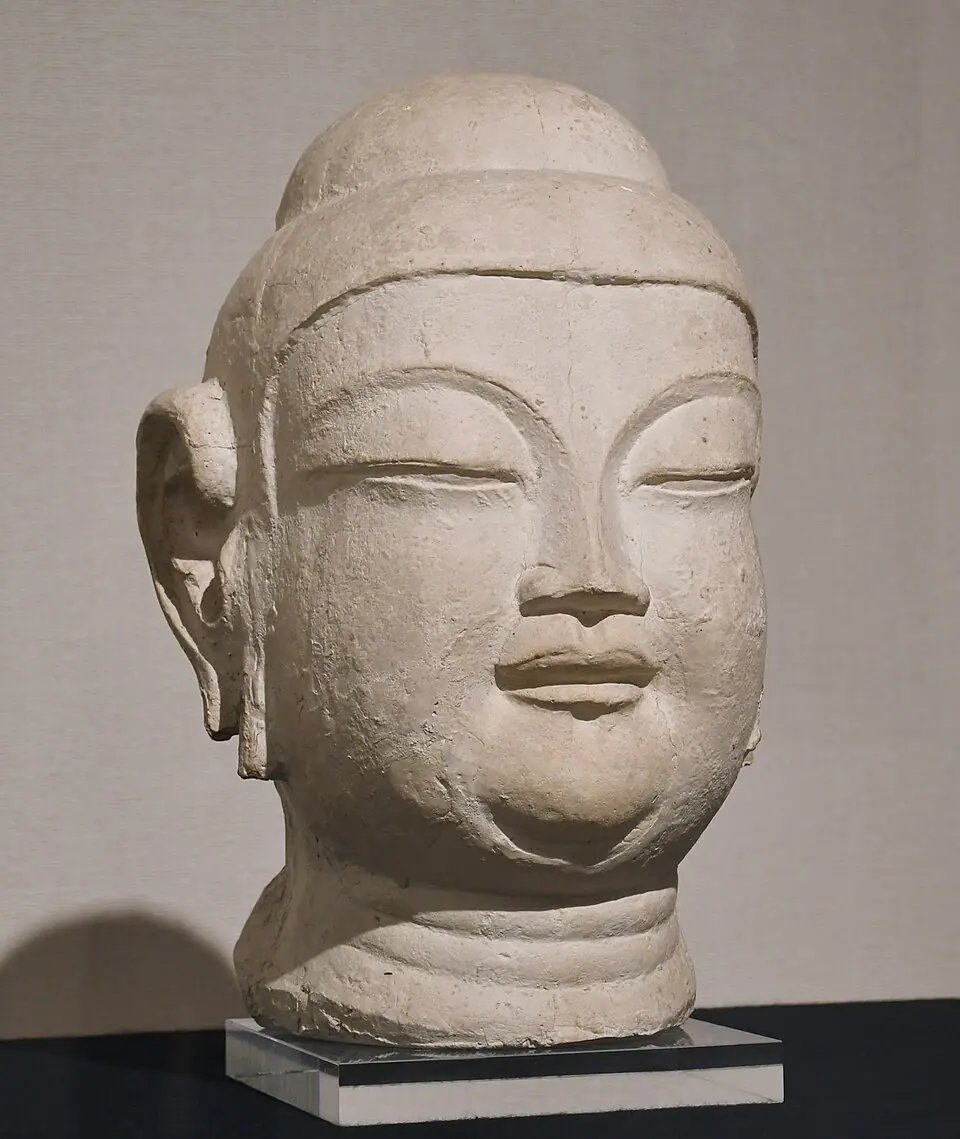
9. Freedom from Māra’s nets
May all beings be delivered from the nets of Māra and the bonds of mistaken doctrines, and established in right view.
10. Freedom from prisons
May those who are chained, condemned or threatened by the king be freed from fear and sorrow, by the power of my merit.
11. Food for the hungry
May those suffering from hunger be first fed, then nourished by the taste of the Dharma.
12. Clothing for the cold
May those who are poor, naked, tormented by cold, mosquitoes and heat receive precious clothes, ornaments, flowers, music and cause for joy.
An overall reading
It is striking how the twelve vows alternate the material and the spiritual: hunger sits beside wisdom, clothing beside precepts. Vows 1 and 2 speak of the Buddha’s light, vows 3 to 5 of the path, and vows 6 to 8 of the body and the human condition. Vow 9 is about freedom of thought, vow 10 about justice, and vows 11 and 12 about basic needs. This last series gave the cult its very concrete character, and inspired institutions of mutual aid in Buddhist Asia. In ancient Japan each vow was associated with one of the twelve heavenly generals (see symbols and legends).
The twelve vows in a few words
In Japan, each vow is often summed up in a few words: a light that gives beings the marks of a Buddha; success in their actions; no lack; entry into the great path; pure conduct; complete faculties; removal of illness; the vow on women’s condition; right view; release from punishment; food; and finally clothing and ornaments. These summaries are not in the sūtra: they are reading aids. Some temples hold Yakushi’s monthly day on the 12th, in reference to the twelve vows, as Yakushi-ji explains on its website.
What the Chinese words say
Each vow opens with the same formula: “I vow that in a future life, when I have attained awakening…” (願我來世得阿耨多羅三藐三菩提時). The vow then describes a situation of suffering, and how it is turned around. In several vows, the change comes from “hearing my name” (聞我名已). This is the heart of devotion to the Medicine Buddha: the name is seen as a reminder of the vows, and the tradition stresses the intention of the one who hears it.
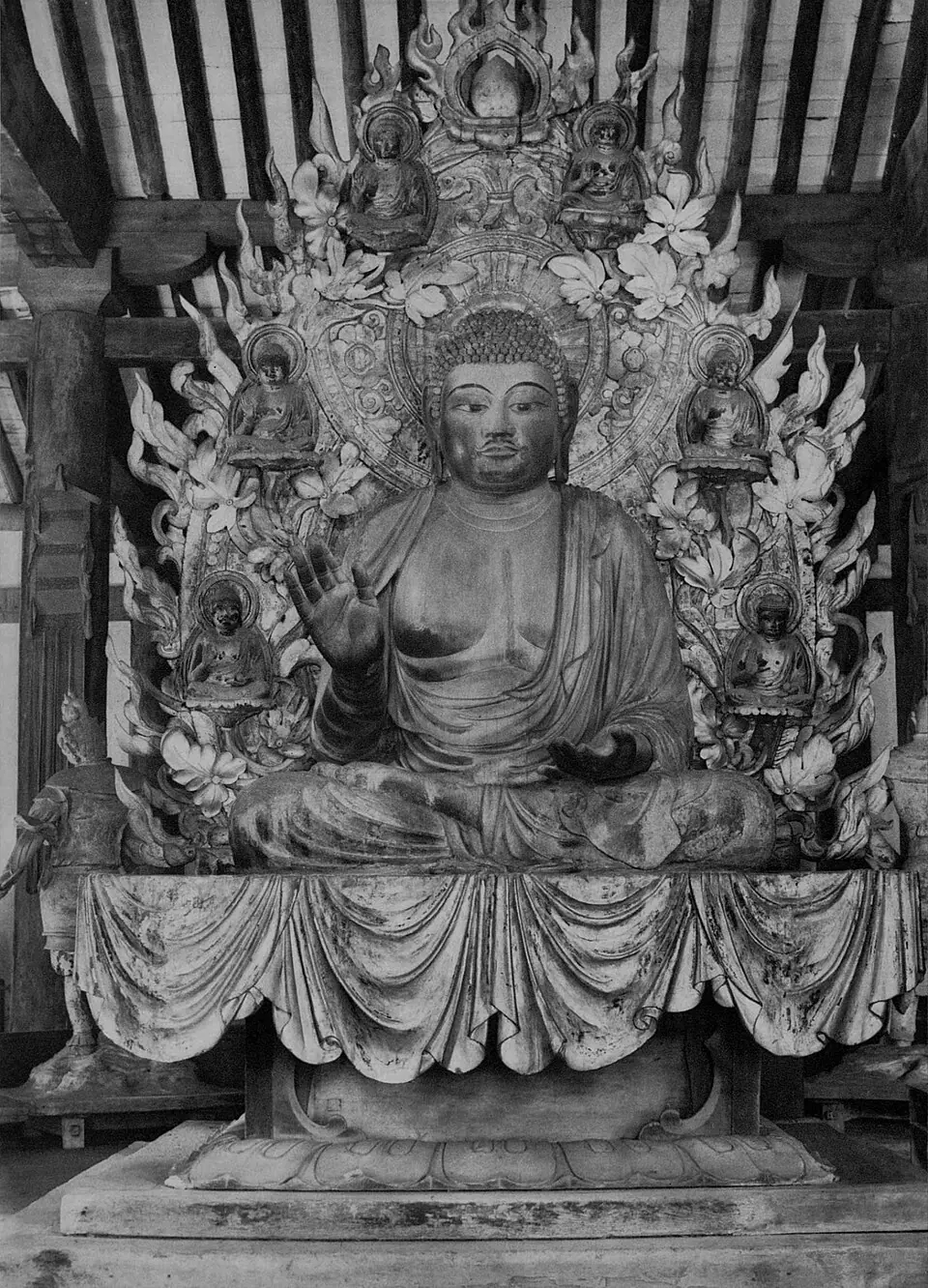
The second vow gives the Buddha his most famous image: a body “like lapis lazuli, clear inside and out, pure and spotless”. The word rendered as lapis lazuli, vaiḍūrya, means a blue gem; its exact identity is debated. See the article on lapis lazuli.
The three Chinese versions side by side
The twelve vows appear in the three classic translations: Dharmagupta (615, Taishō 449[4]), Xuanzang (650, Taishō 450[1]) and Yijing (707, Taishō 451). Order and content are the same; vocabulary changes. Xuanzang writes clearer, more regular language, and his is the version most temples recite. Yijing places Bhaiṣajyaguru’s twelve vows at the end of a longer series: six other Buddhas each make eight or four vows before him, forty-four vows in all. The vows of these six Buddhas take up related themes: release from poverty, fear, quarrels and bad rebirths.
The Tibetan version
The Kangyur keeps the vows in the Tibetan version of the sūtra (Toh 504[5]), translated into English by the 84000 project. The content is close to the Chinese. Tibetan teachers often read the vows during the rituals of the eight Medicine Buddhas, before reciting the mantra.
How to read the vows today
- As a religious text: each vow is an aspiration of the bodhisattva, not a guarantee. Teachers often stress this.
- As a historical document: the vows show the fears of an era, hunger, cold, prison, the abandonment of the sick, and the place given to women.
- As an invitation to act: several traditions read the vows as a model of generosity. They inspired alms, food distribution and places of care run by Buddhist communities; see the example of the Angkor hospitals.
The vows and the twelve generals
At the end of the sūtra, twelve yaksha generals promise to protect those who keep the Buddha’s name. Their number echoes the vows, and art often places them around the statue. In Japan they were later linked to the twelve animals of the Chinese cycle, but this link does not come from the sūtra. See the twelve generals.
The vows in prayer
In East Asian temples, the whole sūtra, vows included, is often recited at Medicine Buddha ceremonies, for example on the eighth day of the month. In Tibet the vows are read as part of a broader practice, with offerings and dedication. In both cases the reading ends by sharing the merit for the good of all beings. Dates are in the calendar.
A short glossary
- Bodhisattva: a being who aims at awakening for the good of all; the vows are made by the future Medicine Buddha while he is still a bodhisattva.
- Tathāgata: “Thus-Gone”, a title of the Buddhas.
- Supreme perfect awakening (anuttarā samyaksaṃbodhi): the state the vows look towards; each vow opens with it.
- Māra: in Buddhist texts, the figure of what hinders awakening; the ninth vow speaks of his nets.
- Precepts: the rules of conduct of lay people and monastics, at the heart of the fifth vow.
- Pure land: the world of a Buddha, here the eastern land of Pure Lapis.
The eighth vow, read in context
The eighth vow speaks of women who, hearing the Buddha’s name, would be reborn as men. It reflects the social conditions of its time, when women had few rights and faced specific hardships. Modern teachers and translators often explain it in that context, and many stress that awakening does not depend on gender. Lapis reports the text as it is, without adding to it.
Sources
- Medicine Buddha Sūtra, Xuanzang’s translation (Taishō 450)
- Raoul Birnbaum, The Healing Buddha (1979)
- Japanese Wikipedia, 薬師如来 (the 12th day and the twelve vows)
- Taishō 449 (Dharmagupta) — CBETA
- 84000, Toh 504
- 84000, Toh 503 (seven Tathāgatas)
The versions of Dharmagupta, Xuanzang and Yijing differ slightly in detail.
In practice and the seven Buddhas
When a tradition reads the twelve vows aloud, it often links them to Yijing’s series of seven Buddhas: each Buddha has own aspirations, and Bhaiṣajyaguru remains the most invoked. This is not a medical checklist; it is a devout reading of the sūtra. See seven / eight Buddhas and the pillar.
Further sources
- Taishō 450 (Xuanzang) on CBETA
- Taishō 451 (Yijing) on CBETA
- Bhaisajyaguru — Wikipedia · Lapis citations
Lapis is free and has no advertising. You can support its upkeep.