Buddhist Russia: Buryatia, Kalmykia and Tuva
Three Russian republics with a Buddhist tradition, linked to the Mongolian and Tibetan world; in Buryatia the Medicine Buddha is called Otosho.
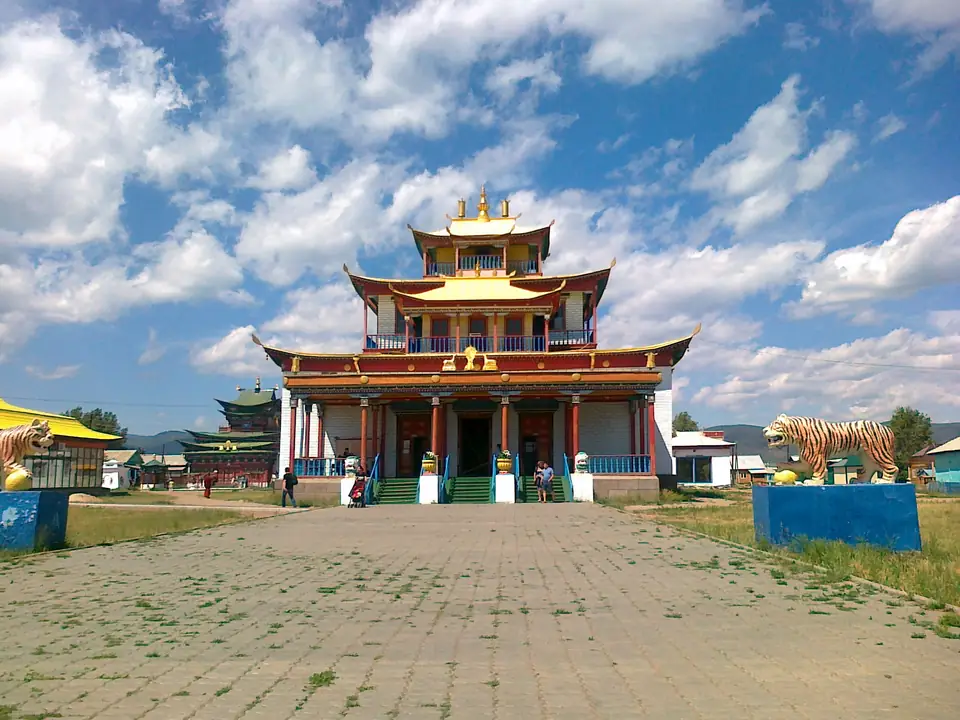
Here are the landmarks of these three republics, seen through the Medicine Buddha.
Buryatia: datsans and emchi lamas
In Buryatia the Medicine Buddha is called Otosho. Aga Datsan, consecrated in 1816, opened a faculty of Tibetan medicine in 1884, founded by the Danzhinov brothers; it trained “emchi lamas”, monk-doctors. Ivolginsky Datsan, founded in 1945, is now the country’s main monastery. The National Museum of Buryatia keeps an Atlas of Tibetan Medicine of 76 painted sheets.
Kalmykia
The Kalmyks, western Mongols, settled on the lower Volga in the 17th century. Deported in 1943, they returned in 1957. In Elista, the Golden Abode of Buddha Shakyamuni opened in 2005.
Tuva
In Tuva most monasteries (khurees) disappeared in the 1930s. In Kyzyl, Tsechenling khuree was consecrated in 1999.
Uncertainties
Names and spellings vary from one language to another; we found no regular date for an Otosho rite published by these monasteries.
Sources
- Агинский дацан, aginskydatsan.ru
- Национальный музей Республики Бурятия, «Атлас тибетской медицины»
- Иволгинский дацан, ivolgdatsan.ru
- khurul.ru
- ituva.ru, Цеченлинг
Lapis is free and has no advertising. You can support its upkeep.